Bulgaria Joined the Euro: What Changed for Property Buyers in 2026
I am working this market right now — based in Sveti Vlas, speaking with buyers every week, inspecting properties, closing transactions. Since January 2026, the most common question I receive is: “Vikki, have prices gone up because of the euro?” or “Is it even worth buying after all this?”
Here is an honest answer — without the optimism you would expect from an agent and without unnecessary alarm.
In brief: The Bulgarian lev had been pegged to the euro at a fixed rate of 1.95583 since 1999, so the January 1, 2026 transition was not a financial shock. The price increase of +15–18% happened in 2025 as a market reaction to the anticipated changeover, not the event itself. In 2026, price growth has slowed to 5–12%, the choice of properties has widened, and SEPA transfers have removed one of the main practical obstacles for European buyers.
What Actually Happened: the Facts
On January 1, 2026, Bulgaria became the 21st member of the eurozone. The lev was withdrawn from circulation and the euro became the sole official currency.
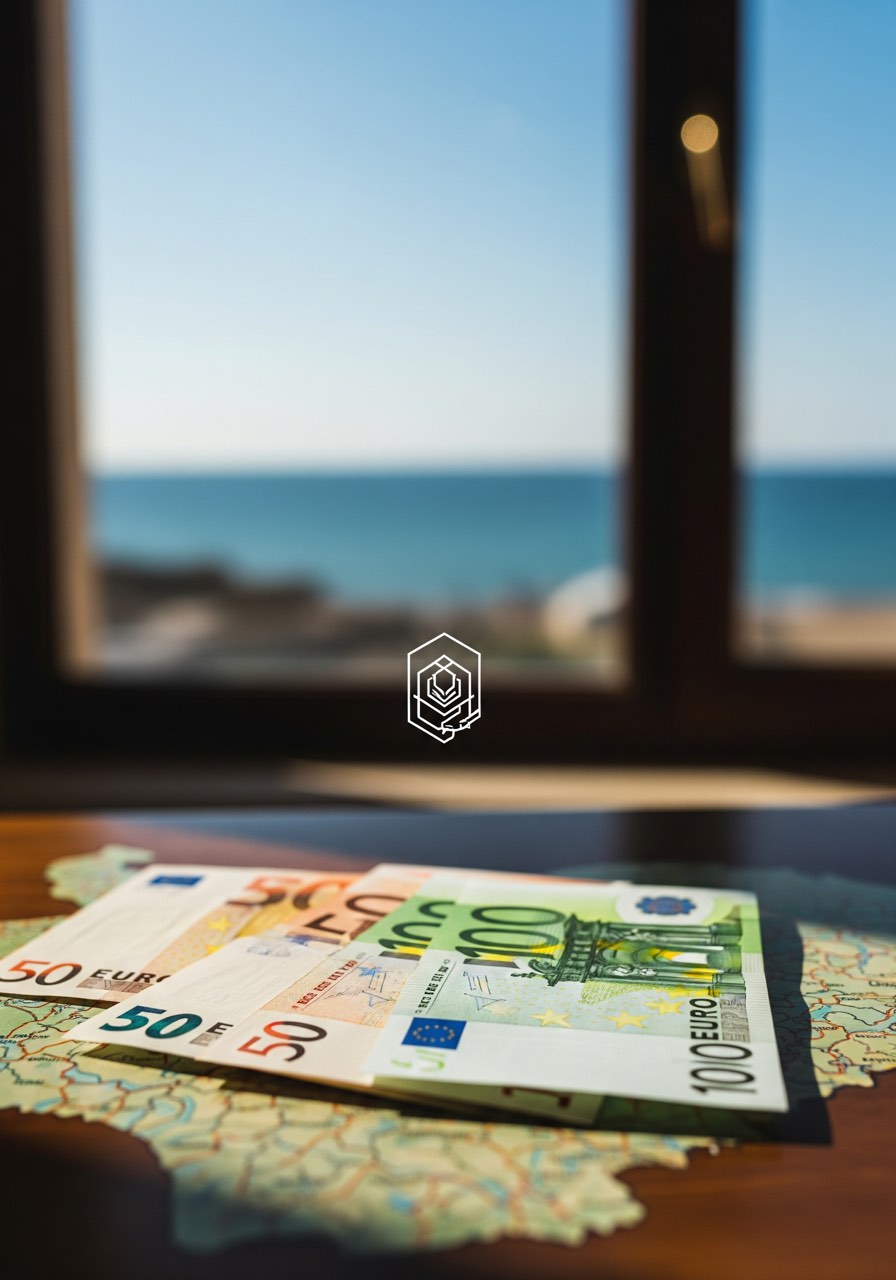
The fixed exchange rate of 1 EUR = 1.95583 BGN had been in place since 1999, when the lev was pegged to the German mark and then automatically converted to the euro. The rate had not moved a single decimal point in 27 years. The transition was effectively administrative: the coins and banknotes changed, not the pricing reference.
Until August 2026, a dual-display period is in effect — sellers are required to show prices in both euros and lev. This is useful for checking whether a seller has rounded up during conversion.
How the Euro Affected Prices
To be direct: the euro as an event had almost no effect on prices. What affected prices was the expectation of the euro.
Throughout 2025, the Bulgarian property market grew by +15–18% — sellers raised prices in anticipation, buyers rushed to “get in before the changeover.” According to the ECB blog (April 2026), the actual inflationary effect of the transition itself was only +0.3–0.4 percentage points. Overall inflation fell through the first quarter of 2026. The introduction of the euro did not accelerate inflation — in fact, it came down.
There is one real risk I observe in my work: rounding on conversion. A property priced at 150,000 lev equals €76,697. But a seller lists it at €80,000 or €85,000. Technically permissible, but the buyer pays €4,000–10,000 simply for a round number. That is why I always cross-check current prices against the original lev figure.
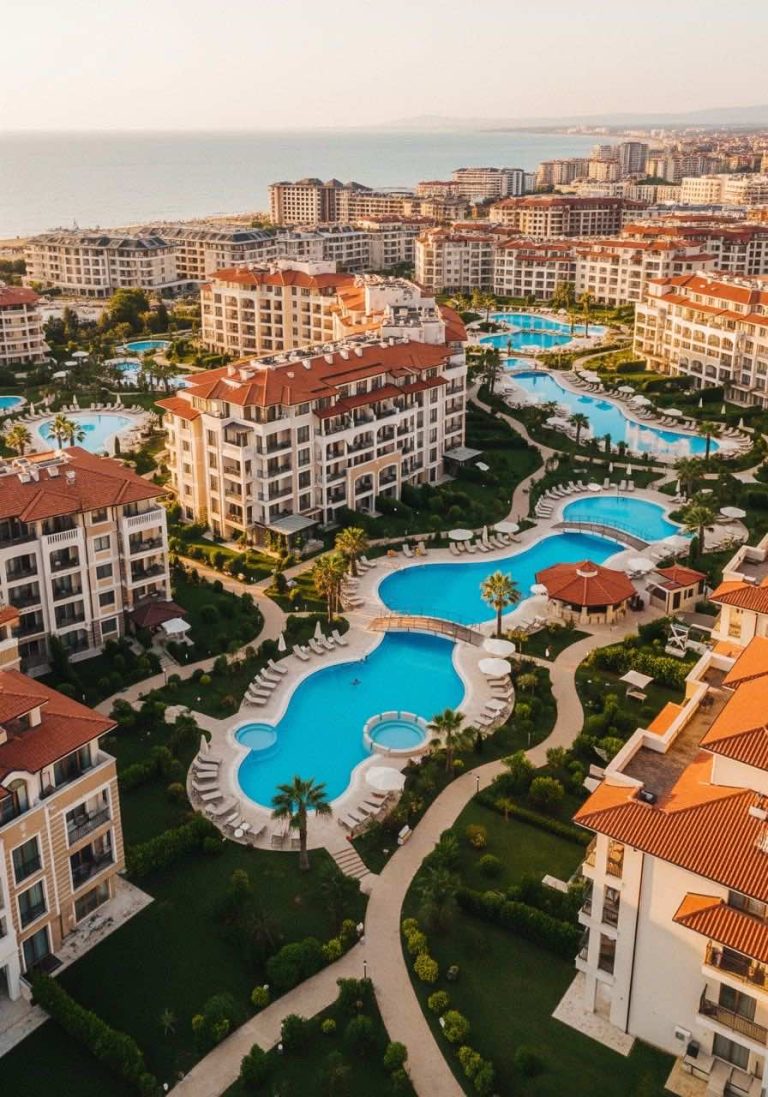
In Sunny Beach and Sveti Vlas, I am observing the following: supply increased noticeably in the first quarter of 2026 compared to the same period in 2025. Sellers are locking in gains on the back of the hype cycle, and some — particularly those who purchased in 2021–2022 — genuinely want to exit. That means inventory is available and buyers have negotiating room that did not exist in 2024.
The outlook for the coastal market in 2026 is growth of 10–12% for Sunny Beach and Sveti Vlas. Studios from €35,000–40,000; average price per square metre around €1,100/m² in Sunny Beach, and €900–1,400/m² in Sveti Vlas depending on the complex and floor.
What Changed for the International Buyer
Here the changes are real — and some of them are significant.
SEPA transfers. Bulgaria is now in the eurozone, meaning a buyer from Germany, Austria, Poland, or Romania can transfer euros to a Bulgarian account without currency conversion, without SWIFT fees, and without delays. Previously a transfer could take 3–5 days and cost 0.2–1% of the amount. Now it is a standard SEPA transfer.
Mortgage rates. Rates for non-residents have dropped to 3.5–5% per year (the upper end was previously 5–6%). For EU residents, rates are 2.5–4%. This is partly because the Bulgarian National Bank reduced reserve requirements from 12% to 1%, releasing approximately €8.2 billion into the banking system.
Liquidity at resale. This is arguably the most important argument. Before the euro, a buyer from Germany considering a Bulgarian apartment for resale had to think: “I will eventually need to find a buyer who has no issue with the lev.” Now the entire eurozone is a pool of potential buyers with no currency barrier.
Yield calculations. Return on investment can now be calculated directly in euros without conversion. This was a formality before (the rate was fixed anyway), but psychologically it matters to European investors.
For more on how to evaluate Bulgarian real estate investments, see the dedicated article.
If you are looking at new builds — see new-build apartments by the sea in Bulgaria.
Should You Buy Right Now
I do not give investment advice and I do not say “buy before it is too late.” But I can lay out what I observe.
Arguments for buying now:
Currency risk has been eliminated legally (it was not really there since 1999 in practice, but psychologically it is now settled). The market has moved through its hype phase in 2025 and some speculative sellers have exited. Supply has broadened. Mortgage rates have come down. Transfers are simpler.
Arguments against rushing:
Some properties have already absorbed the “euro premium” — the price was converted with upward rounding and the buyer is paying for air. On certain Sunny Beach complexes I see asking prices that do not reflect the actual condition of the property. Because supply has grown, there is no need to hurry.
Historical context:
According to Global Property Guide data, property in Croatia more than doubled over the decade following EU accession. Slovakia showed a similar pattern after euro adoption in 2009. This is not a guarantee of the same outcome in Bulgaria, but the structural logic is comparable: eurozone membership lowers the barrier for European capital.
What Did Not Change
This matters, because some buyers hear “euro” and assume everything is different.
Taxes remain the same: the property transfer tax is 3%, the rental income tax is 10% flat. These are among the lowest rates in the EU. For detail, see Taxes on Bulgarian Property.
The purchase process has not changed: reservation — preliminary contract — notary. A foreigner can purchase an apartment directly; land requires a Bulgarian legal entity.
Rights of foreign buyers are unchanged. No new restrictions for EU citizens, Ukrainians, or most other nationalities. Apartments — no restrictions.
Maintenance fees (such as the annual taksa za poddarzhka in residential complexes) reflect the same amounts in euros as before. The euro introduction did not alter the cost structure.
One important exception. Since March 2026, Russian citizens face restrictions when purchasing Bulgarian property — a confirmed EU residence permit is now required. This is not a euro-related development but a consequence of broader European regulatory pressure. There are no restrictions for Ukrainian citizens.
Frequently Asked Questions
When exactly did Bulgaria adopt the euro?
January 1, 2026. Bulgaria became the 21st member of the eurozone.
At what rate was the lev converted?
1 EUR = 1.95583 BGN. This rate had been fixed since 1999.
Did property prices increase because of the euro?
The main increase (+15–18%) happened in 2025 as anticipation of the transition. The transition itself added only 0.3–0.4 percentage points to inflation according to the ECB. In 2026, growth has slowed to 5–12%.
Is it worth buying now?
It depends on the specific property. The market has cooled from its peak, inventory is available, and mortgage rates have come down. But some sellers rounded prices up during conversion. Buying with a check on real value is advisable.
How are payments now handled for a purchase?
Buyers from EU countries can send euros via SEPA without conversion. This is faster and cheaper than before.
Have apartment running costs changed?
Amounts have stayed the same in conversion terms. Maintenance fees in complexes and utility payments were converted at the fixed rate without upward rounding by most management companies.
Can foreigners still buy property in Bulgaria?
Yes. Citizens of any country can purchase apartments directly. Land only through a Bulgarian legal entity. Restrictions for Russian citizens have applied since March 2026 (EU residence permit required). No restrictions for Ukrainian citizens.
What are the taxes on purchase?
Transfer tax: 3% of the transaction value. Rental income tax: 10% (flat rate). For details, see Taxes on Purchase.
Can a non-resident get a mortgage in Bulgaria?
Yes. Rates for non-residents are currently 3.5–5% per year. Banks consider applications from EU citizens and a number of other nationalities. I can help identify the right bank for a specific situation.
What is EGOIST Estate?
I am Vikki Dronova, the agency’s founder. I work exclusively in my own region: Sunny Beach, Sveti Vlas, Ravda, Nesebar. I only show properties I have personally inspected. I accompany transactions from the first viewing through to the notary. I stay in contact with clients after purchase — property management, rental, renovation.
Ready-to-move furnished homes — resale apartments by the sea.
What to Do Next
The euro transition removed one barrier that genuinely held some buyers back — uncertainty around currency. The market today is not what it was in 2024: it is larger, supply is broader, and the infrastructure for European buyers is better.
I see no reason to rush for the sake of rushing. But I do see specific properties at realistic prices that are worth looking at right now. If you are considering coastal property, let us look together — without pressure and without promises.