Should You Buy an Apartment in Bulgaria in 2026?
I am not here to tell you to buy. I am here to tell you what I see.
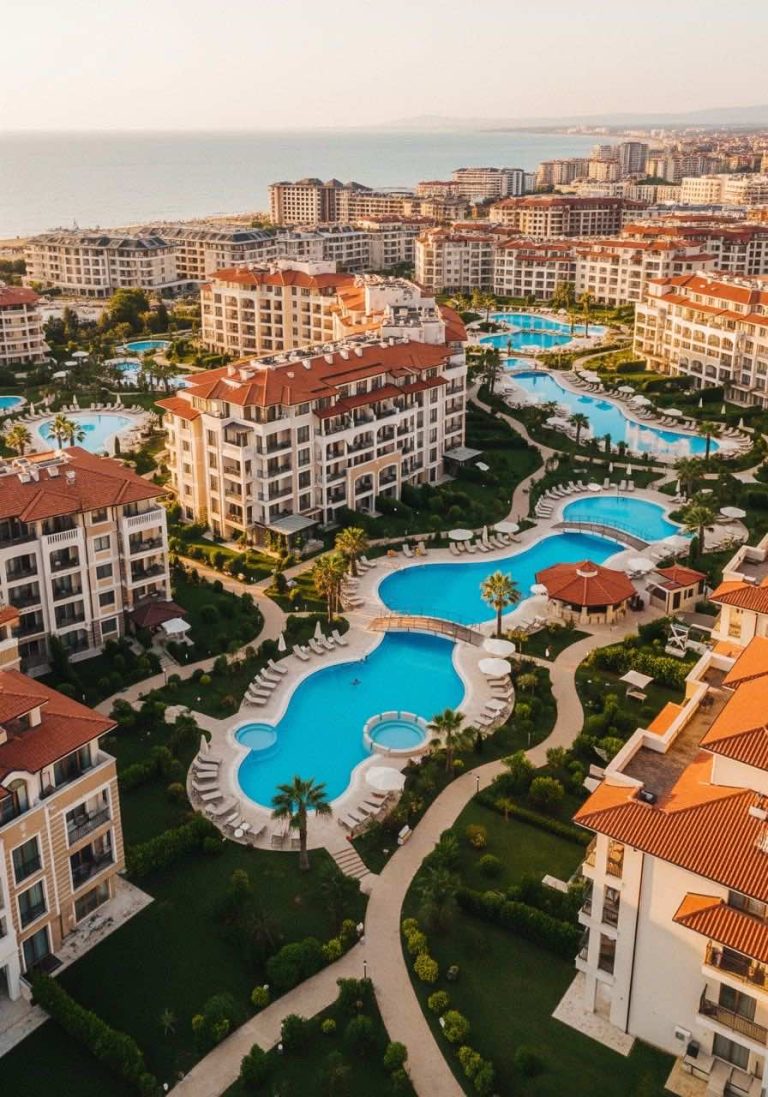
I have lived in Sveti Vlas for four years. I work here every day — inspecting properties, talking to developers, closing transactions, listening to buyers. Not from behind a screen in another city. From here, on the Black Sea coast.
This question — “is Bulgaria worth buying into?” — comes up several times a week. And I have rarely found a frank, detailed answer that neither pushes you toward a purchase nor affects false neutrality. So I wrote one myself.
There is no universal yes or no here. There are facts, my personal assessment, and questions that will help you understand whether Bulgaria is the right fit for you.
What Happened to the Market in 2025–2026
Three events over two years fundamentally changed the Bulgarian property market. Not “influenced” — fundamentally changed.
Schengen from January 2025. Bulgaria joined the Schengen Area fully. This removed border friction for European buyers, simplified relocation, and made the country more accessible for tourism and business. International buyer flow increased. In the first quarter of 2025, international arrivals to Bulgaria were up 4.9% year-on-year.
Euro from January 1, 2026. The Bulgarian lev had been pegged to the euro since 1997 at a rate of 1.95583 BGN per €1 — and that was the official conversion rate when the country joined the eurozone. The exchange risk had effectively not existed before accession, but formal eurozone membership removed the last psychological barriers for European investors.
Price growth. According to Eurostat, Bulgaria recorded residential price growth of 18.3% year-on-year in Q4 2024 — one of the highest figures in the EU. Analysts tracked 15–18% growth across 2025. In the popular coastal areas — including Sunny Beach and Sveti Vlas — prices rose roughly 25–30% over three years: from approximately €900–1,300/m² in 2022 to €1,250–1,800/m² by 2025.
The market is no longer what it was in 2021. Anyone working from outdated articles about “the cheapest property in the EU” needs to reset that reference point.
Five Arguments for Buying Now
1. Euro Stability and No Currency Risk
Bulgaria is in the eurozone. You buy, collect rental income, and if needed, sell — all in euros. For buyers from outside the EU, this means a single European asset without currency conversion losses.
For comparison: property in Turkey or Georgia is purchased in dollars or local currency exposed to inflation risks. Bulgaria offers a European legal system and a European currency at prices that have not yet reached Western European levels.
2. Prices Are Still Below the European Average
The national average is around €1,100/m² based on 2025 data. In Sveti Vlas: €1,250–1,800/m² depending on the property. In Vilnius, Tallinn, or Warsaw: €2,500–3,500/m². In Barcelona or Nice: €5,000–8,000/m².
Bulgaria remains one of the most accessible markets in the EU. The gap is narrowing, but it is still meaningful.
3. Coastal Rental Demand Is Stable
The Bulgarian Black Sea coast receives millions of tourists annually. During peak season (July–August), well-positioned properties reach 85–95% occupancy. In Sveti Vlas — with its less mass-market format and more affluent visitor profile — figures are better than in Sunny Beach. Gross yield on a quality Sveti Vlas apartment with active self-management can reach 7–11% in season.
To be clear: that is the in-season yield. Not annual. More on that below.
4. Schengen and Residency as Practical Arguments
Buying property in Bulgaria does not automatically give you residency — but it provides legal presence in the country and, when other requirements are met, makes you eligible to apply for a residence permit. For people seeking a foothold in the EU or a legal base in a Schengen country, this is a real argument, not a marketing one.
Bulgaria’s Schengen membership means free movement into most European countries without additional visas.
5. Limited Supply Near the Sea — Especially in the Sveti Vlas Format
Coastline does not expand. Development in Sveti Vlas is constrained by planning rules, and few large new complexes are in the pipeline. This distinguishes it from Sunny Beach, where supply has historically been excessive.
Five Arguments Against Rushing
1. Much of the Price Growth Has Already Happened
The market has already priced in Schengen and the euro. Buyers who entered in 2021–2022 recorded 30% growth over three years. Those entering now are not positioned for that same gain — it is behind them.
Forecasts for 2026 are moderate: 6–10% per year in optimistic scenarios, 3–5% in conservative ones. That is not bad — but it is no longer the story of “buy cheap before EU accession.”
2. Sunny Beach — a Market with Excess Supply
If you are considering Sunny Beach as an investment, look at it clearly. There are thousands of apartments, many of which are being resold precisely because managing them at a distance proved harder than the marketing suggested. New complexes continue to be built. Competition among landlords is high. Prices in the budget segment will remain under pressure.
This does not mean “do not buy in Sunny Beach.” It means: select carefully, do not buy simply because it is cheap. A detailed comparison of Sunny Beach and Sveti Vlas is here.
3. Remote Management Is Not Passive Income
A coastal apartment is not passive income by default. It means cleaning between stays, utility payments, maintenance fees, finding tenants, resolving small issues. If you live in another country and do not have a reliable management company or a trusted person on the ground — a portion of the income goes to fees, and a portion of your energy goes to oversight.
I have seen people who bought and could not set up effective rental management. Money invested, apartment sitting empty most of the year.
4. Liquidity Is Lower Than It Appears
Bulgarian property is not a liquid asset like equities. If you need cash quickly, a sale will take several months at minimum — and in less popular locations, longer. The buyer pool is increasingly active but not instant.
If the purchase is funded with the last of your available capital, or with money that may be needed within 1–2 years, that is a risk.
5. Seasonality: Income Is Earned in Three Months
The real holiday season on the Bulgarian coast is June, July, and August. The shoulder months (May and September) generate some income but significantly less. From October to April, rental income is essentially zero if the property is not designed for year-round residential use — and most coastal apartments are not.
Detailed rental yield calculations including costs are in a dedicated article.
If you are looking at new builds — see new-build apartments by the sea in Bulgaria.
My Observations After Four Years in the Field
I came into Bulgarian real estate not from a sales training programme. I have 17 years in design — I look at a property and see what works and what does not. That background helps.
Over four years, I have seen many different buyers — those who are satisfied and those who are disappointed. Disappointment almost always has one root cause: expectations did not match a reality that nobody explained upfront.
Here is what I have observed:
Buyers who look back on their purchase positively typically knew specifically why they wanted that property. Not “an investment generally” — but concretely: “I will come for three months myself and rent it through a manager in summer.” These people were prepared for the fact that management requires attention, and they either handled it themselves or had arranged something reliable in advance.
Buyers who later regretted had most often made the decision emotionally after one visit. Saw the sea, felt the air, heard “this is the last one,” signed. Later it turned out that the complex was far from the water, the maintenance fee was higher than promised, and rental income was a third of what the developer’s salesperson had quoted.
I work with a specific region — Sunny Beach, Sveti Vlas, Ravda, Nesebar. Not all of Bulgaria. I would rather understand one market deeply than give advice on markets I do not know from the inside.
One fact that many people overlook: Bulgaria’s transition to the euro technically changed almost nothing for the market, because the lev had been pegged to the euro at a fixed rate for 27 years. What changed was the psychological perception among Western European buyers. And that genuinely stimulated demand in late 2024 and early 2025. More on this in the dedicated euro article.
Who Bulgaria Is Right For — and Who It Is Not
This is probably the most useful section of this article.
Bulgaria is the right fit if:
- You want your own seaside property in the EU and plan to use it yourself for 1–3 months a year. Rental income is a welcome benefit, not the primary goal.
- Your investment horizon is 5–10 years. Not “put in money and take it back in two years.”
- You are prepared to engage with property management, or you already have a reliable person in place.
- You are looking for a European asset in a hard currency with a relatively low entry point by EU standards.
- Legal certainty and physical security in an EU country matter to you.
Bulgaria is not the right fit if:
- You are counting on passive income with no management involvement and no reliable partner on the ground.
- You expect to “flip it in two years with a 30% profit.” The market does not work that way.
- Year-round occupancy matters to you — coastal Bulgaria is seasonal by nature.
- Your budget is the last of your available capital. Property requires a reserve.
- You are not prepared for a property selection process that takes time, not two days.
Frequently Asked Questions
Can a foreigner buy an apartment in Bulgaria?
Yes. EU citizens buy without restrictions. Citizens from outside the EU — including Ukrainians — can also buy apartments. Restrictions apply to land, not residential units in multi-apartment buildings.
What is Act 16 and why does it matter?
Act 16 is the final occupancy permit in Bulgaria. Without it, the building cannot legally be used for residential purposes or permanent address registration. Buying a new-build without Act 16 carries the risk of developer delays or non-delivery. On existing properties with Act 16, that risk is absent.
Can you get an instalment plan from the developer?
Yes. Several developers on the Black Sea coast offer instalment plans — in some cases up to 7 years. Mortgages for non-residents are available from Bulgarian banks but require local credit history and provable income, which complicates the process for foreign buyers.
What is the realistic rental yield?
Gross yield on well-positioned coastal properties: 5–11% per year with active season management. After deducting maintenance fees, utilities, cleaning costs, and off-season vacancy, the net yield will be lower. The exact figure depends on location, the specific property, management approach, and seasonal occupancy. Detailed calculations here.
What does the purchase process look like?
Preliminary contract — deposit — legal due diligence — notarial transaction — registration. From first contact to notarial deed signing: typically two weeks to several months depending on the property and the buyer’s preparation.
Is a Bulgarian tax number required?
Yes, for completing the transaction a foreign national requires a Bulgarian personal number (EGN) or BULSTAT (for legal entities). This is a standard procedure managed by the notary or broker.
Which is better — Sunny Beach or Sveti Vlas?
Different markets for different purposes. Sunny Beach is a mass-market tourist resort with a wide price range and large inventory. Sveti Vlas is quieter, with a different calibre of rental tenant. In brief: Sunny Beach is cheaper to enter, Sveti Vlas is more comfortable for personal use and attracts a better rental demographic. Full comparison here.
What is happening to prices after the euro transition?
The market is in a normalisation phase. There was no price spike immediately after January 1, 2026 — the increase was already priced in during 2024–2025. Moderate growth continues. Detailed analysis here.
Does property give residency?
Buying property in Bulgaria does not automatically give the right of residence. It can be one factor in an application, but it is neither the only requirement nor a sufficient one on its own. Specific conditions depend on the applicant’s category and should be clarified with a Bulgarian immigration lawyer.
What to Do Next
If you have read this far, you probably already have an instinct about whether Bulgaria suits you or not. Data and arguments help test that instinct — they rarely create it.
If you want a direct conversation without pressure — get in touch. I will tell you what is actually happening in the market right now and help you assess whether looking at properties makes sense in your situation.
If you are ready to look: the property catalogue is here. Only properties I am willing to recommend personally. No filler listings.
Your home, your rules.
Vikki Dronova, EGOIST Estate, Sveti Vlas
Some listings come with a developer payment plan — apartments in instalments.
Price and market data in this article are based on publicly available sources: Eurostat, Global Property Guide, BNR News, and Bulgarian agency analytics — as of early 2026. The property market is not an exchange; forecasts carry uncertainty. Any investment decisions should be made after personal legal and financial consultation.